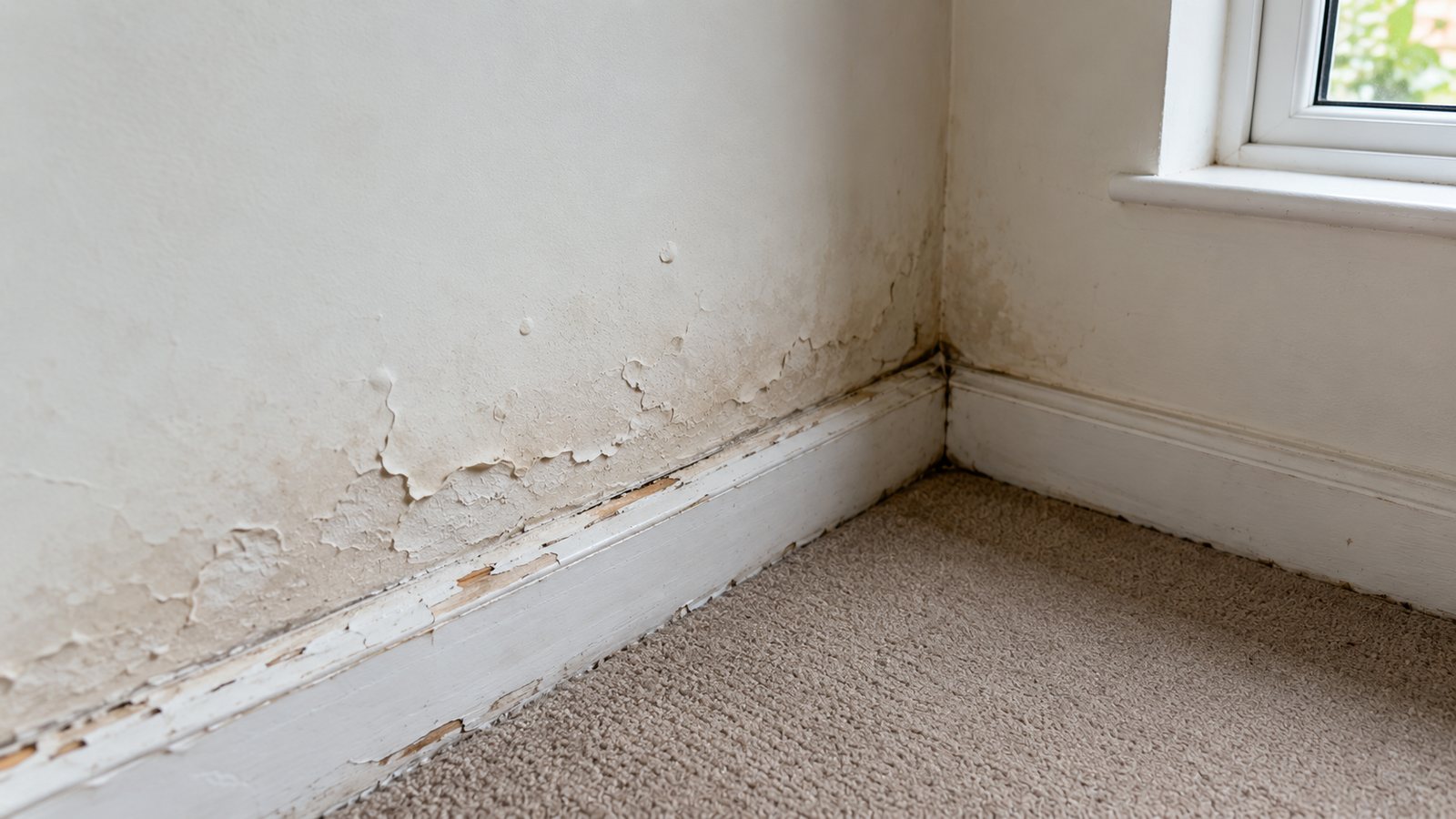
Height and position help more than appearance
Low-level damage may fit ground-related moisture, but a narrow vertical patch beside a downpipe or a high patch below a window suggests a different route. Map the damage before stripping finishes away.
Modern coatings can hide the early stages
Dense vinyl paint, waterproof coatings and some cement-based finishes can reduce evaporation. Moisture may then travel further before it appears or may cause blistering at the interface between coatings.
Replastering should have a reason
Plaster is often removed after damp-proofing because it is damaged or salt contaminated, not because every damp wall automatically requires hacking off. Sound, uncontaminated plaster may not need the same treatment.
Decoration comes after drying
A wall repaired at the moisture source still needs time to dry. Decorating too quickly with a low-permeability finish can trap residual moisture and create another cosmetic failure.
Ready to get the damp looked at?
You can send the job details through MyJobQuote and hear from local damp-proofing contractors who may be interested in the work.
Ask local contractors to quoteQuote requests are provided by MyJobQuote, an independent third-party service. Local contractors may respond to your request.