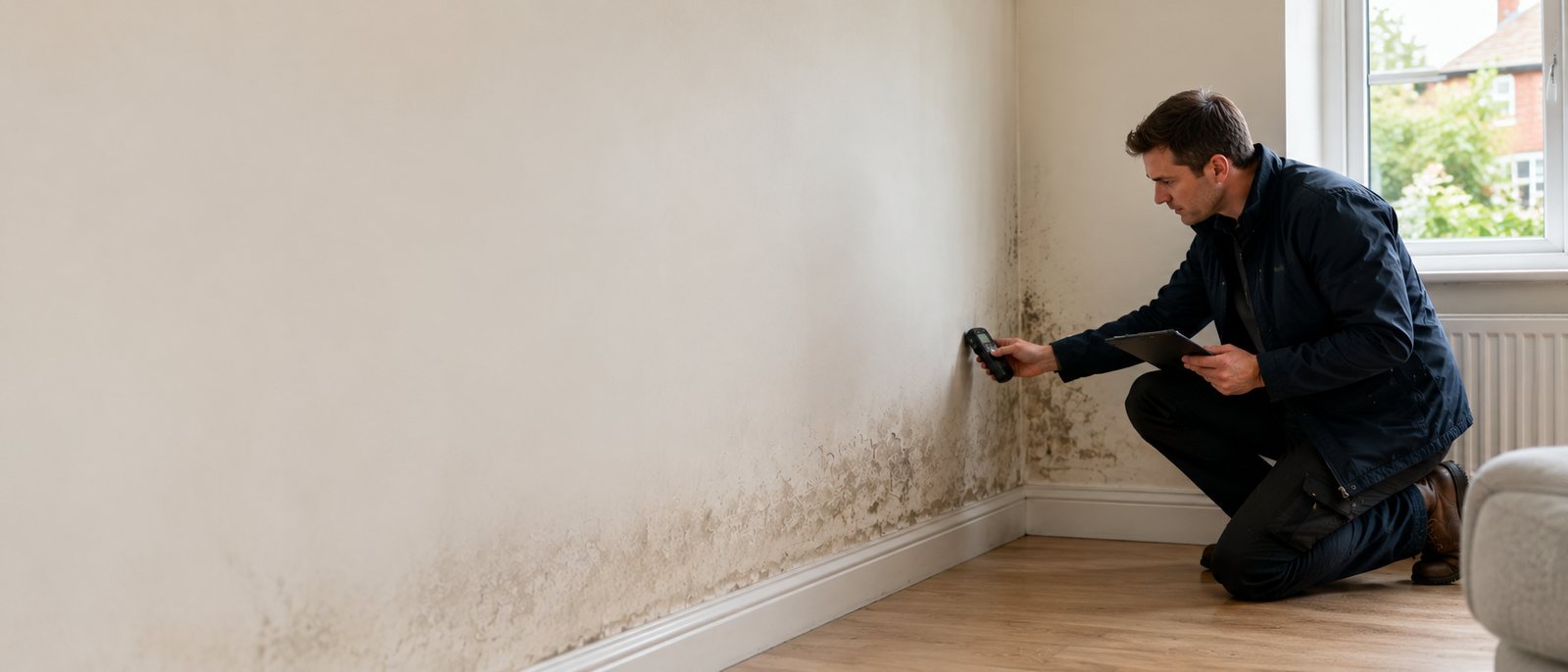
Low-level damp
Moisture concentrated from floor level upwards is the pattern most often associated with rising damp, but the same zone is also affected by high paving, internal plaster bridging, leaking services and damp debris in a cavity. A tide mark is useful evidence only when it agrees with the rest of the building.
Damp that appears after rain
A patch that darkens during prolonged rain is more consistent with water entering from outside than with condensation. The defect may sit above or beside the stain because water can track along mortar joints, lintels, joists or the inner face of a wall.
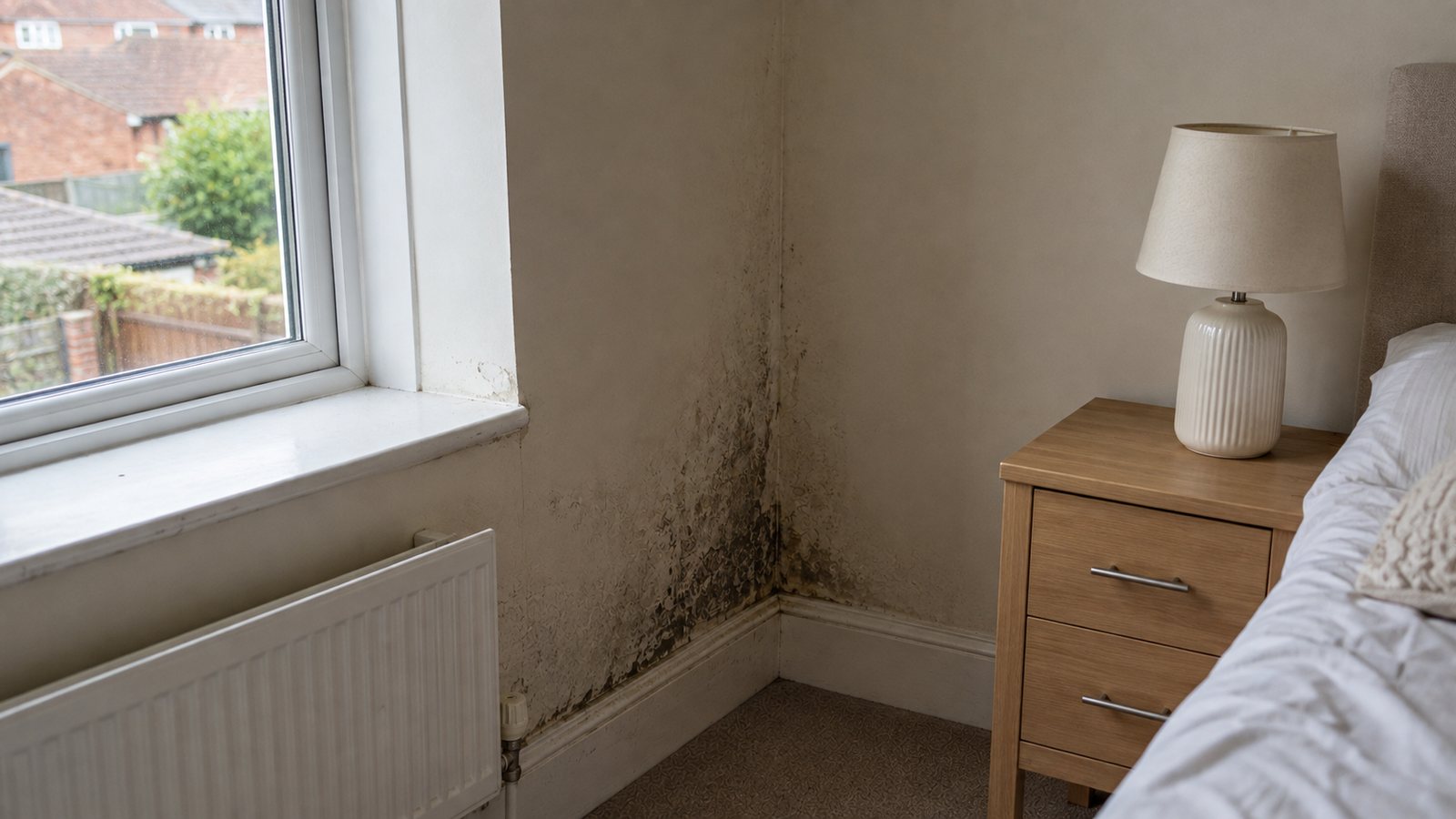
Mould in corners and behind furniture
Black mould on cold corners, window reveals and hidden areas behind wardrobes is a typical condensation pattern. The same room can also have a separate penetrating or plumbing defect, so finding mould does not automatically explain every damp mark.
Damaged plaster and salts
Bubbling paint, loose plaster and white deposits show that moisture or salts have reached the finish. Hygroscopic salts can keep old plaster looking damp even after the original water source has been repaired.
Time to arrange an inspection?
If the cause cannot be established from the visible signs alone, you can ask damp-proofing contractors in your area to inspect and quote through MyJobQuote.
Arrange local quotesQuote requests are provided by MyJobQuote, an independent third-party service. Local contractors may respond to your request.