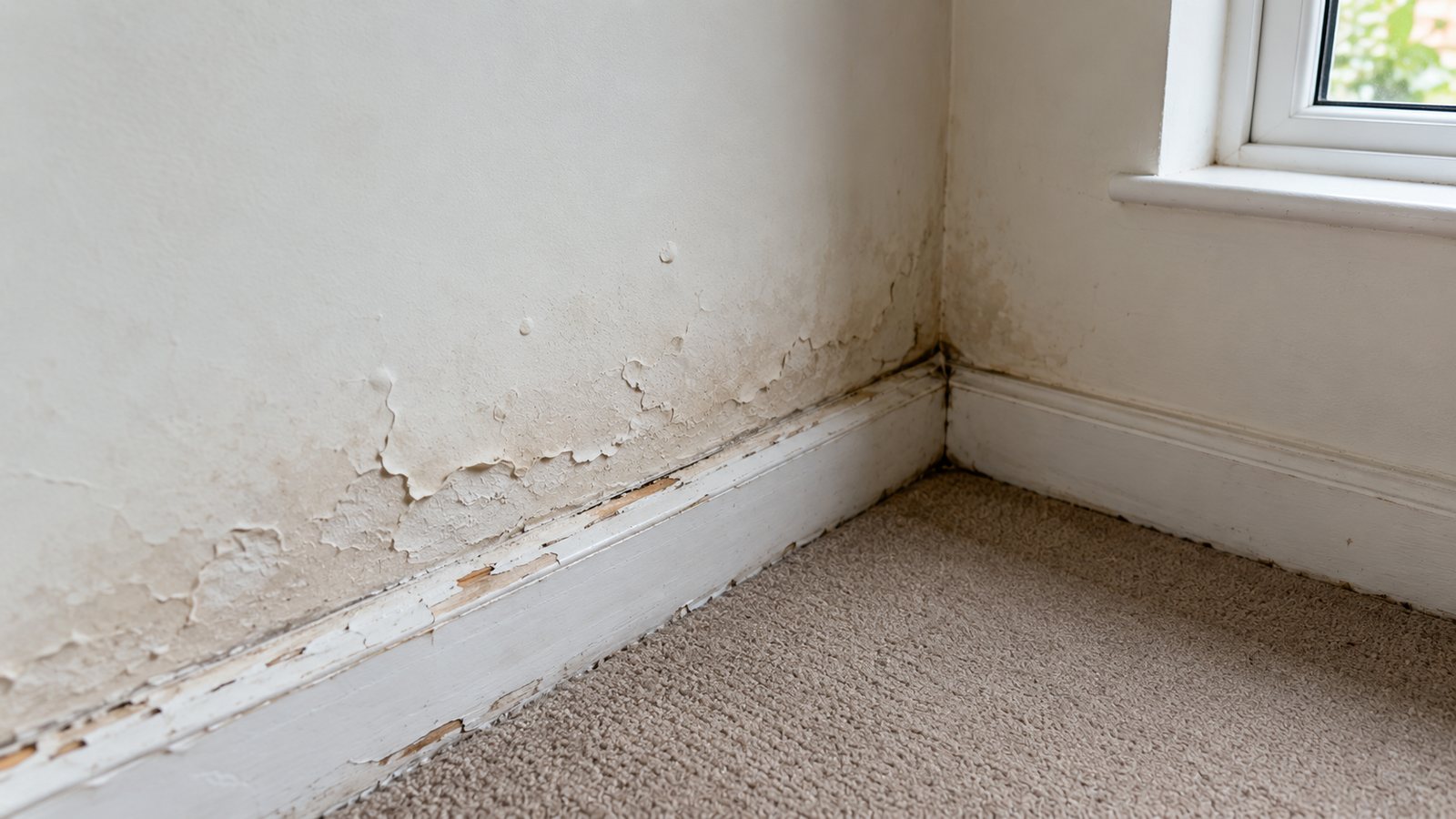
Efflorescence follows moisture movement
Water dissolves soluble salts in masonry or mortar and carries them towards an evaporating surface. When the water leaves, salts remain. New brickwork, leaks and ground moisture can all produce this process.
Some salts absorb water from the air
Nitrates and chlorides commonly found in contaminated old plaster can be hygroscopic. In humid conditions they attract moisture, so the surface can feel damp even though no new liquid water is entering at that moment.
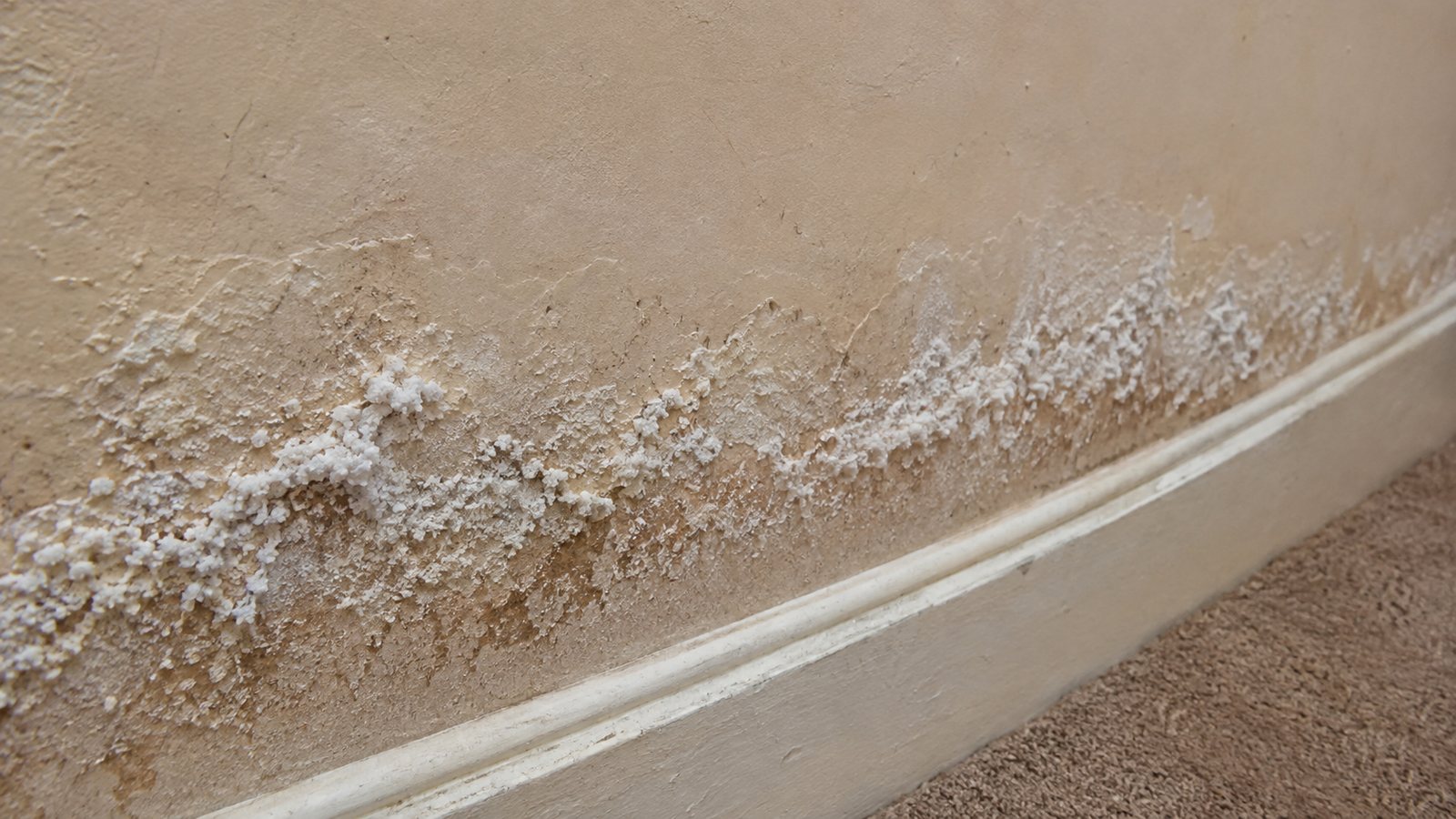
Meter readings can be distorted
Electrical moisture meters respond to conductivity as well as water. Salt-contaminated plaster can therefore give persistently high readings. This is one reason a diagnosis should not rely on a row of meter readings alone.
The finish may need separate treatment
Stopping the water source and dealing with contaminated plaster are separate jobs. Where salts are severe, simply drying the wall and repainting may not prevent recurrence.
Want to know what the repair may cost?
For a meaningful price, the contractor needs to understand the cause and the extent of the work. MyJobQuote can help you request quotes from local damp-proofing contractors.
Get local pricesQuote requests are provided by MyJobQuote, an independent third-party service. Local contractors may respond to your request.