Damp proofing and damp diagnosis
Damp Proofing UK — Find Out What’s Really Causing the Damp
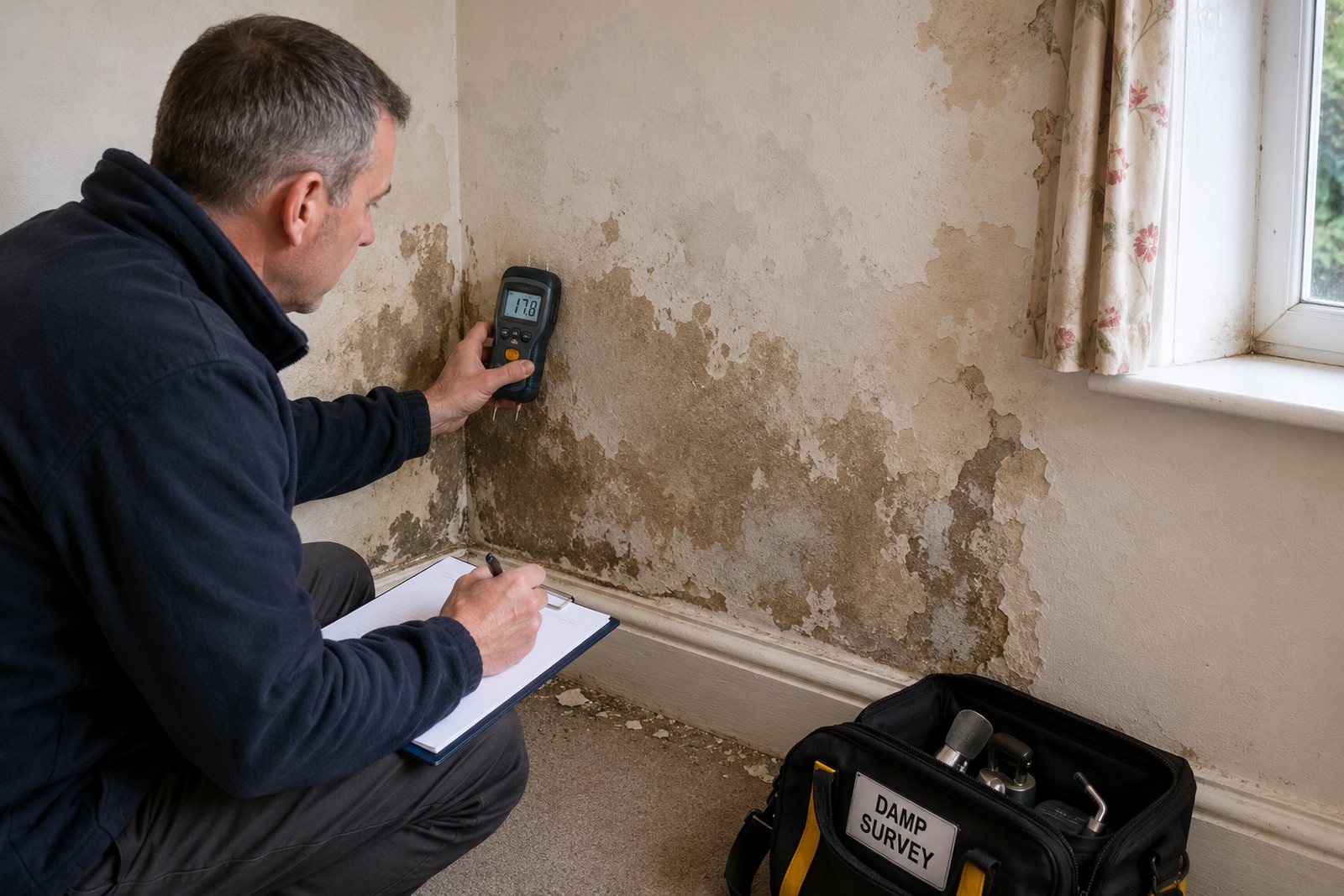
A damp mark tells you that moisture is present. It does not tell you whether the cause is rising damp, rain penetration, condensation, a plumbing leak or an older salt-contaminated plaster.
Accurate diagnosis matters
The wrong diagnosis can lead to the right treatment being used in the wrong place
Low-level damp is often described as rising damp before the outside ground level, rainwater pipes, plumbing and wall construction have been checked. The opposite mistake also happens: a genuine damp-proof-course problem can be dismissed as condensation because mould is present somewhere else in the room.
A useful investigation builds a picture from the position of the damp, how high it reaches, whether it changes with the weather, what is on the other side of the wall and how the building is constructed. Moisture-meter readings can help map a pattern, but a reading on masonry does not identify the source by itself.
What are you seeing?
The position and behaviour of the damp provide useful clues
Start with the visible symptom rather than choosing a treatment. Several defects can create similar marks, so each pattern needs to be considered alongside the building and the weather.
Damp at the bottom of a wall
A low damp band can fit rising damp, but raised paving, plaster bridging, a leaking pipe or salts left by an older problem can produce a similar appearance.
What to look for →Black mould in a corner
Mould concentrated on cold corners, window reveals or behind furniture usually points towards surface condensation and restricted air movement rather than moisture rising from the ground.
What to look for →A patch that worsens after rain
A mark that darkens during prolonged or wind-driven rain deserves an external inspection. Pointing, render, gutters, downpipes, window joints, chimneys and roof junctions can all be involved.
What to look for →Damp around a chimney breast
The source may be higher than the stain. Flashings, the chimney stack, rain entering an unused flue and salts within old chimney plaster can each produce a different pattern.
What to look for →Wet or decayed skirting
Skirting can absorb moisture from damp plaster or masonry. On suspended floors it can also be a warning to look at joist ends, sub-floor ventilation and plumbing below floor level.
What to look for →White powder or crystals on plaster
Some deposits are simple efflorescence. Others are salts within old plaster that continue attracting moisture from the air after the original water source has gone.
What to look for →Damp behind a wardrobe
A wall hidden by large furniture stays colder and receives less air movement. Mould behind the furniture can therefore occur while the exposed part of the same wall looks dry.
What to look for →Bubbling paint or crumbling plaster
The finish shows that moisture or salts are affecting the surface, but it does not identify where the water came from. The height, position and weather pattern matter more.
What to look for →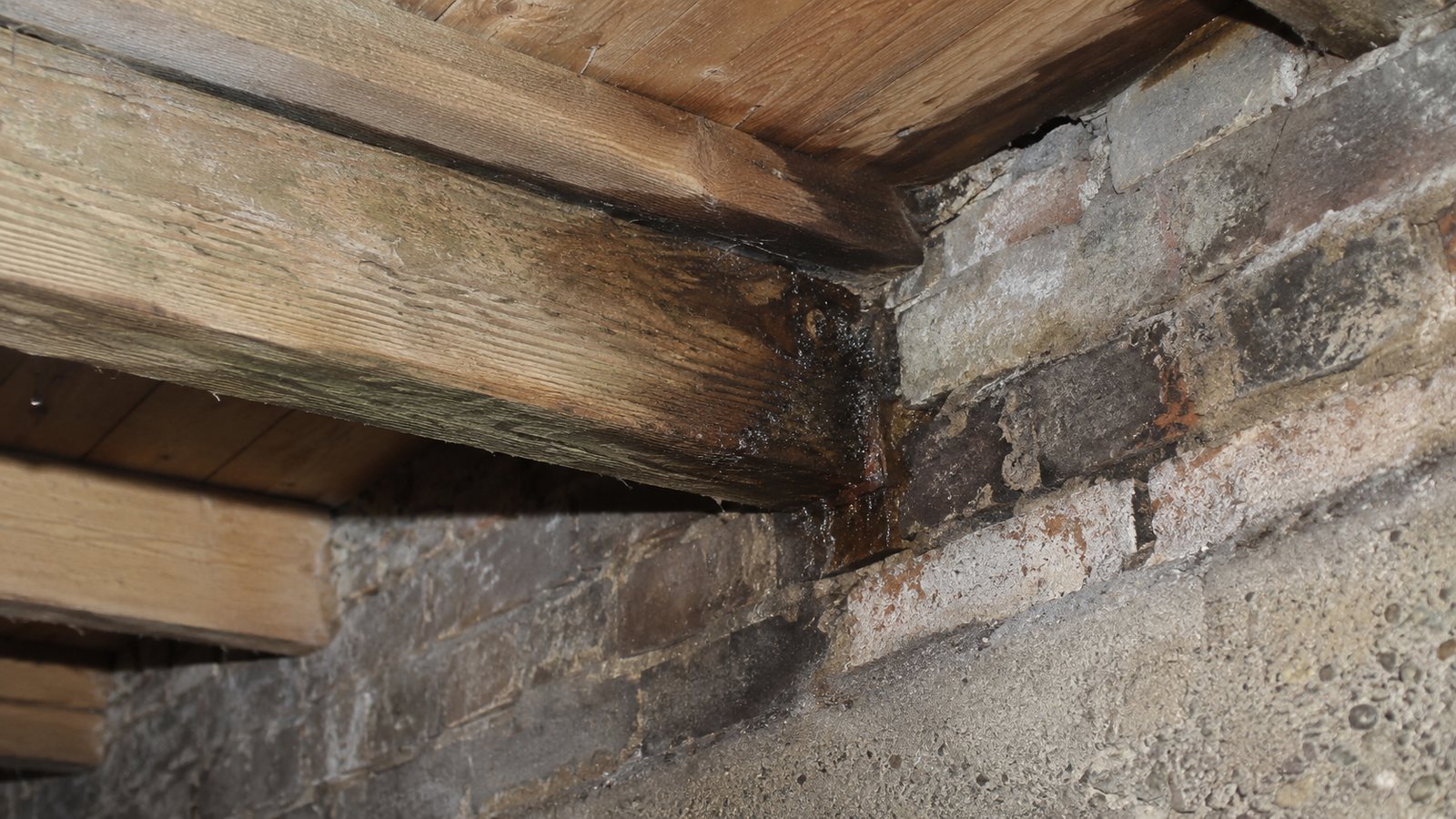
What instruments can tell you
A moisture meter is useful evidence, not a diagnosis
Electrical meters are quick ways to compare one part of a wall with another. They can show where readings increase and help decide where closer investigation is worthwhile.
On plaster and masonry, however, salts and different materials can affect the reading. A row of high readings near the floor may support other evidence of rising moisture, but it does not prove that a failed DPC is the cause.
A survey should make the evidence fit together
- Internal damp pattern and height
- Weather history and outside defects
- Ground level and DPC position
- Wall and floor construction
- Plumbing and drainage where relevant
- Salt contamination and previous treatment
Common causes
Damp proofing is only one part of the picture
Rising moisture
Where moisture is moving upwards through porous masonry, the DPC, ground level, bridging and the condition of the plaster all need considering before a treatment is specified.
Read about rising damp →Rain penetration
A rain-related patch may originate at a gutter, cracked render, pointing, chimney or window junction. Water can move within masonry before appearing indoors.
Read about penetrating damp →Condensation
Cold surfaces, moisture produced indoors and poor air movement can create black mould without any defect in the DPC. Location is often particularly revealing.
Condensation patterns →Leaks and trapped moisture
Small plumbing leaks, overflowing rainwater goods and moisture trapped behind dense finishes can all mimic more familiar damp-proofing faults.
What should be checked →Want local damp-proofing contractors to quote?
Once you have described what you can see and where the damp is appearing, you can put the job through MyJobQuote and ask contractors in your area for quotations. Compare what each contractor thinks is causing the moisture as well as the price.
Quote requests are provided by MyJobQuote, an independent third-party service.