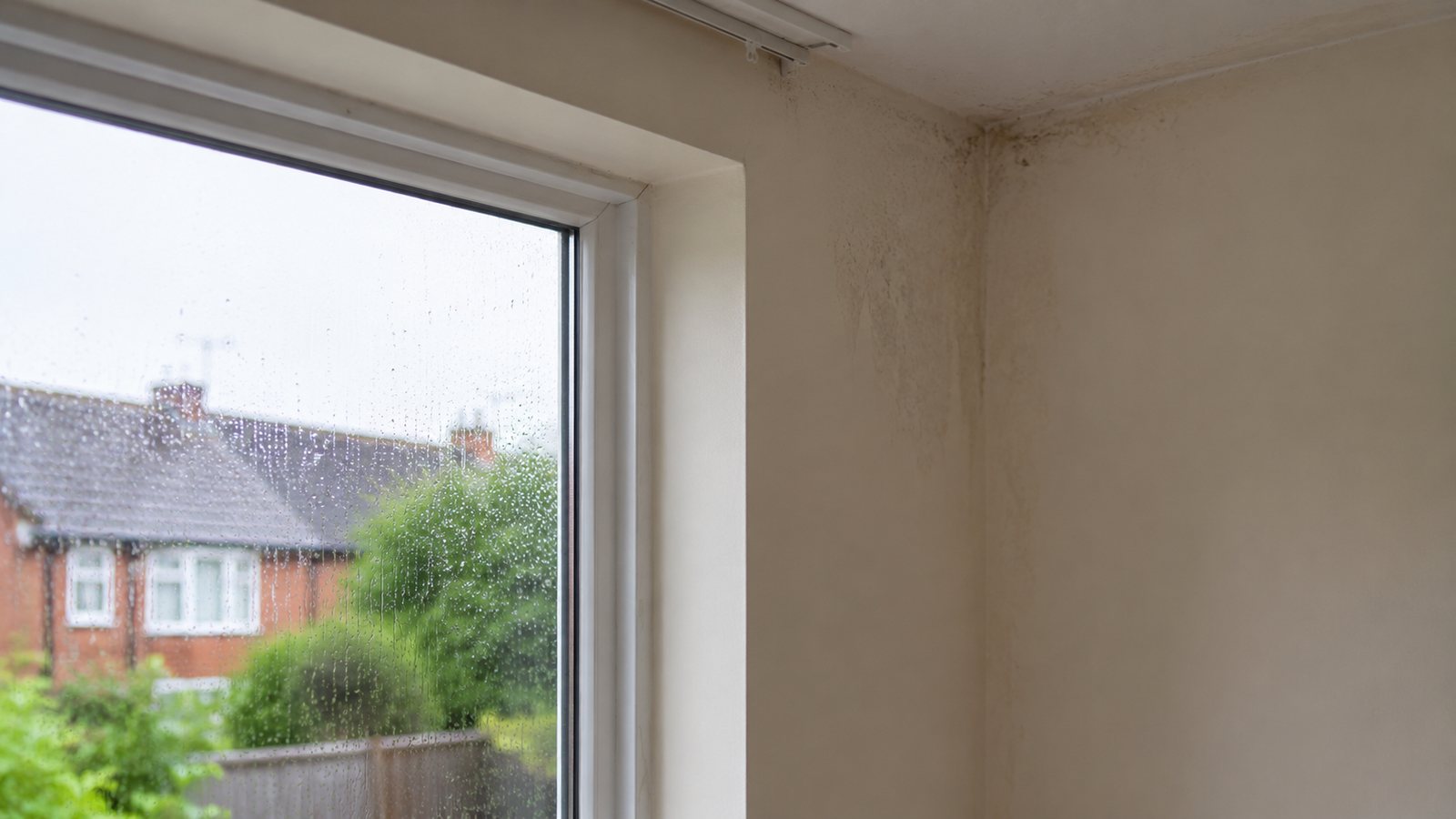
Look above as well as outside the stain
Water can run down the back of render, along a mortar joint or over a lintel before reaching the inside surface. Around chimneys and roof junctions it can travel on timber or under coverings before becoming visible downstairs.
Rainwater goods can hide their leaks
A downpipe split on the wall side can keep brickwork wet without an obvious jet of water. Gutters can also overflow behind the fascia or at an outlet, soaking the top of the wall while looking almost normal from ground level in dry weather.
Solid walls behave differently
Older solid masonry walls have no cavity separating the outer wet face from the room. Saturated brick, stone or defective pointing can therefore matter more during long spells of wind-driven rain. Dense cement render or inappropriate coatings can complicate drying.
Compare the weather with the stain
Note whether the patch changes after light showers, prolonged rain or only when the wind is from one direction. That kind of observation can be more useful than a single dry-day moisture reading.
Get somebody local to take a proper look
Photographs and descriptions are useful, but some damp problems need an inspection at the property. MyJobQuote can help you request quotes from local damp-proofing contractors.
Request local quotesQuote requests are provided by MyJobQuote, an independent third-party service. Local contractors may respond to your request.