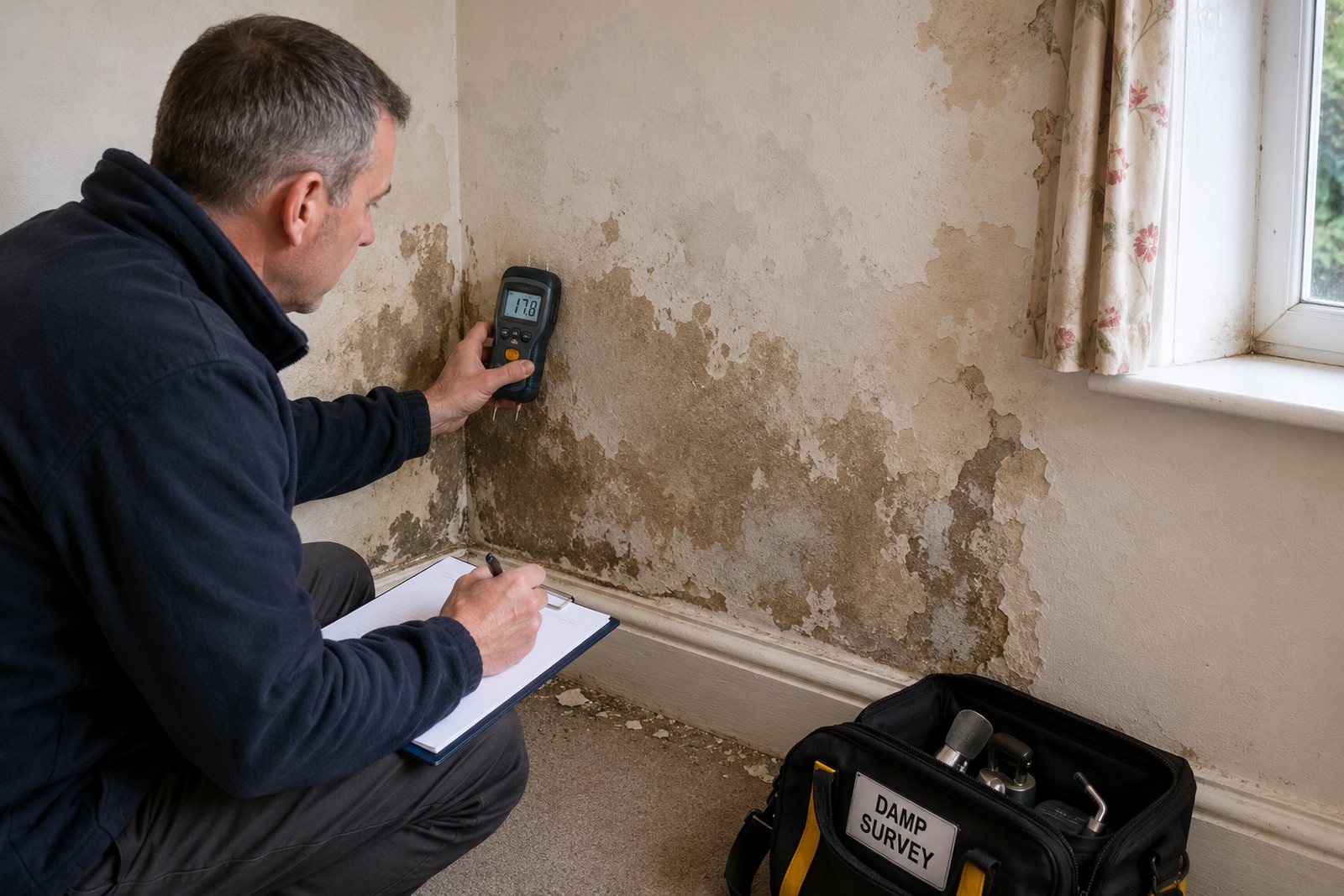
Start with the history
When did the mark first appear? Does it alter after rain, after showers, during winter or after the heating goes off? A defect that tracks the weather deserves different attention from one that follows occupancy.
Inspect the external counterpart
Ground levels, DPC position, render, pointing, windows, gutters, downpipes, chimneys and drains may all be relevant depending on the location of the internal damp.
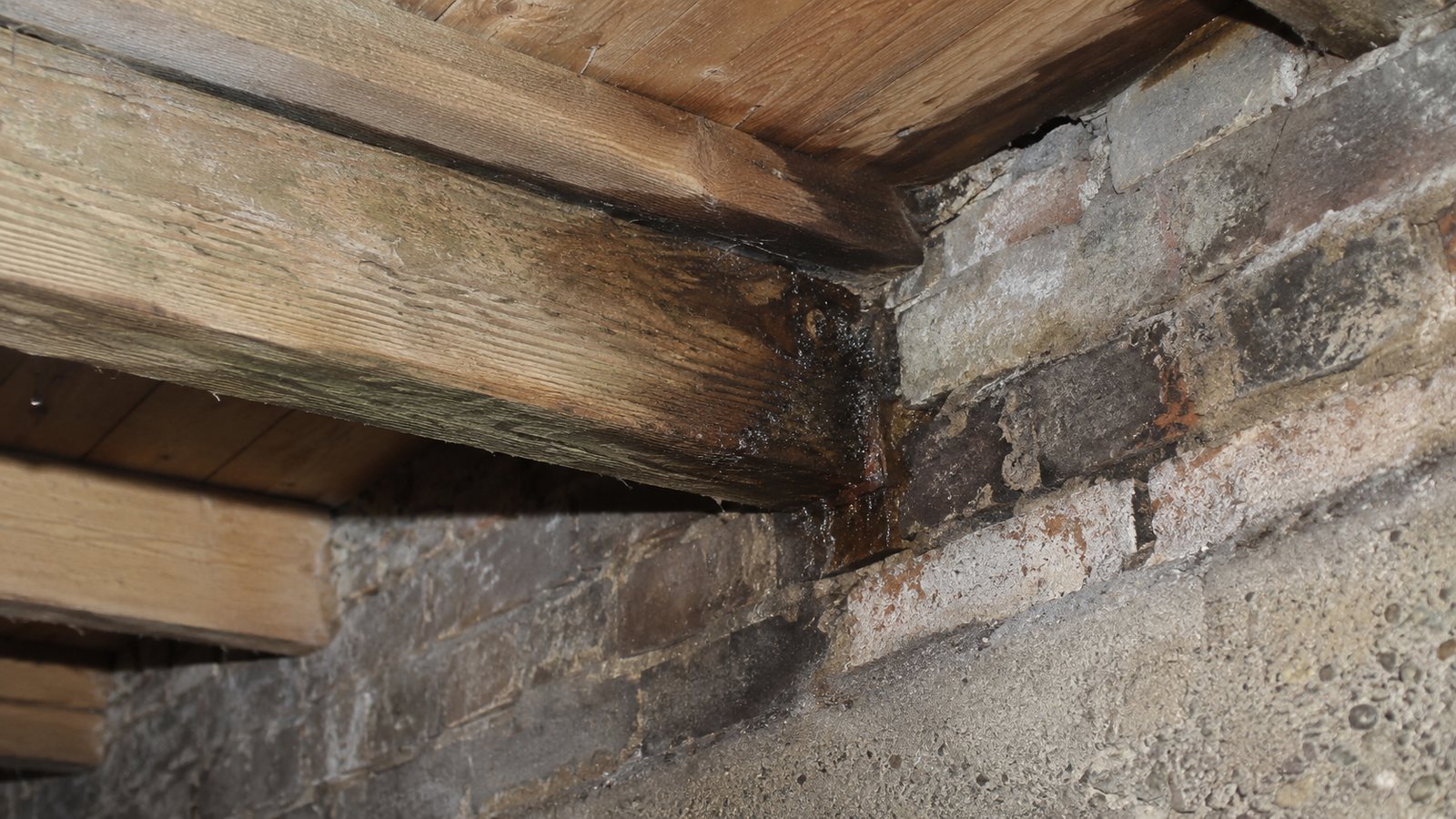
Understand the construction
Solid masonry, cavity walls, suspended timber floors, solid floors and basements each provide different moisture routes. Later extensions and altered floor levels can change the original arrangement.
Use meters as part of the evidence
Electrical readings can map areas for closer inspection but should be interpreted alongside salts, material changes and visual evidence. Where diagnosis remains uncertain, more specific testing may be needed.
A specification should follow the findings
The survey should explain why proposed work is needed. Injection, replastering, ventilation changes or external repairs should each relate to an identified mechanism rather than appear as a standard package.
Planning to have the damp treated?
Before agreeing the work, compare what each quotation says is causing the damp and exactly what treatment is included. MyJobQuote can help you obtain quotes from local contractors.
Compare damp-proofing quotesQuote requests are provided by MyJobQuote, an independent third-party service. Local contractors may respond to your request.