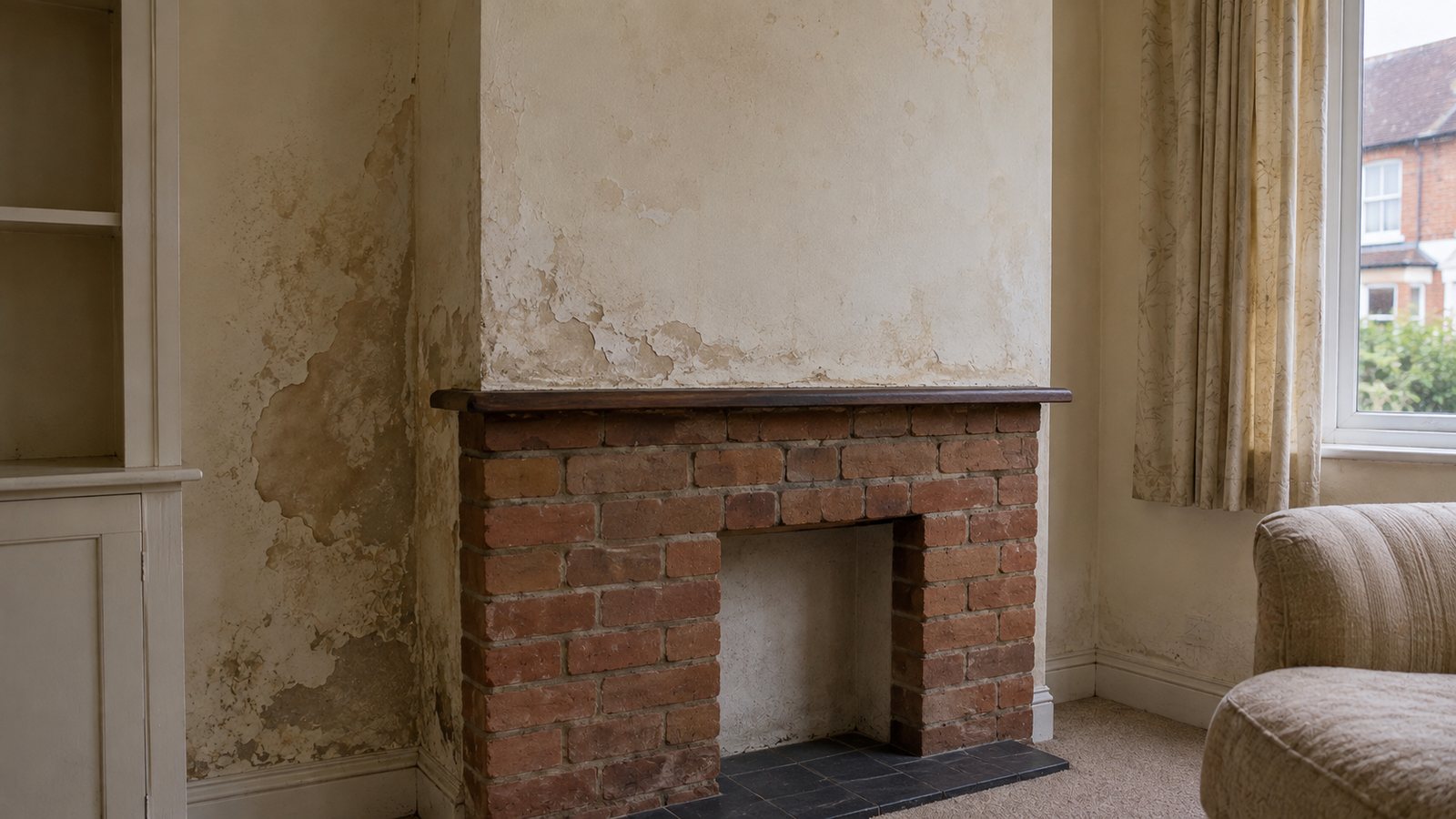
External defects may sit well above the room
Side flashings, rear gutters, open joints in the stack and defective flaunching around chimney pots can all admit rain. Water entering near the roof can run within the breast before showing lower down.
Unused flues can become damp internally
A disused flue may receive little ventilation. Moist air can condense on cold masonry, particularly if the top has been capped without adequate ventilation. Rain entering an open pot is another possibility.
Old chimney plaster can contain salts
Products of combustion migrate into masonry and plaster over decades. Some salts absorb moisture from the air, producing recurring brown or damp-looking patches even after external rain defects have been repaired. Simply painting over them rarely solves that.
One chimney can have more than one problem
A leaking flashing and salt-contaminated plaster can coexist. Repairing the roof stops new rainwater, but the internal finish may still need time to dry or may need replacing if salts continue to affect it.
Need quotes for the work?
MyJobQuote lets you set out what is happening at the property and request quotations from damp-proofing contractors in your area.
Request damp-proofing quotesQuote requests are provided by MyJobQuote, an independent third-party service. Local contractors may respond to your request.