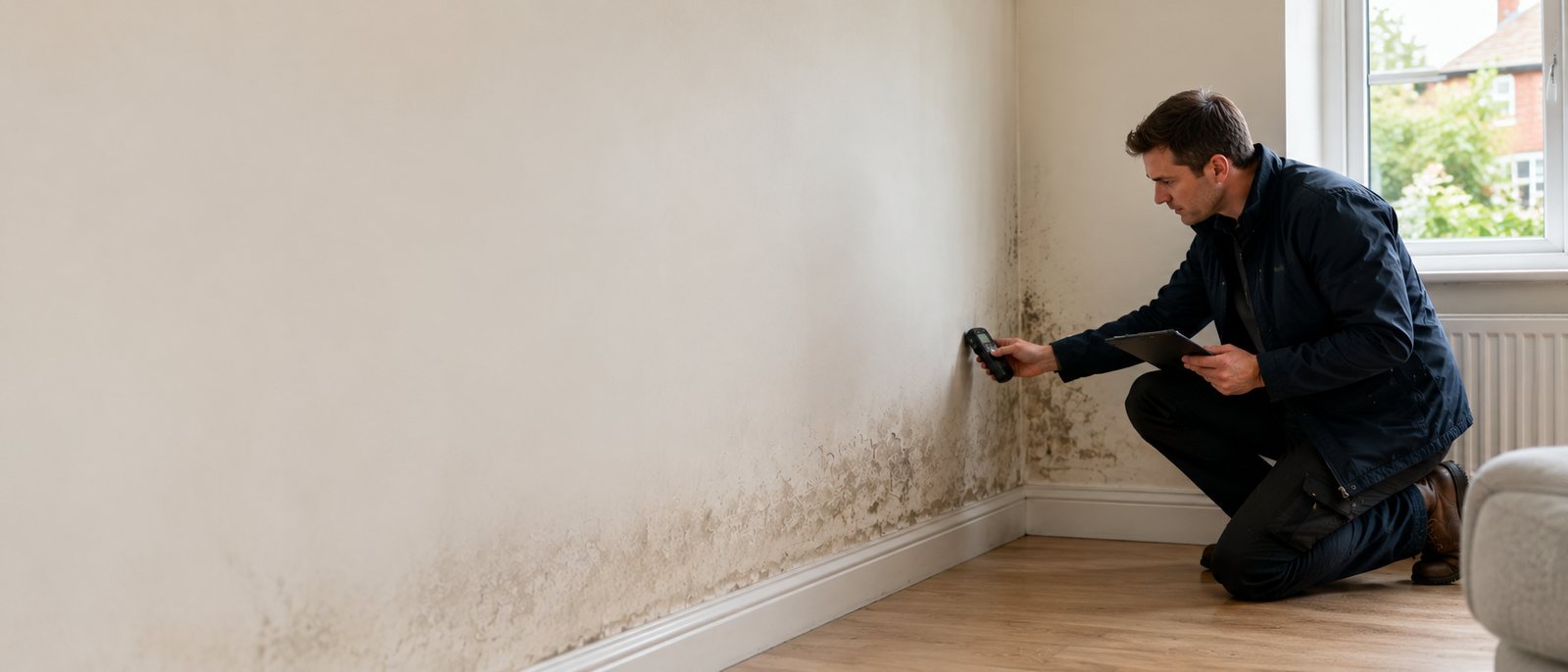
Start outside at the same section of wall
Look for the damp-proof course if it is visible. Paving, paths or flower beds that have been raised over time can leave the DPC too close to the ground or bury it completely. Splashback from hard paving and rain held against the wall can then wet masonry above the original barrier.
On a cavity wall, debris at the base of the cavity can also bridge moisture across to the inner leaf. That problem cannot be diagnosed just by looking at the plaster indoors.
What genuine rising moisture tends to look like
Where moisture is rising through porous masonry, the highest readings and most obvious deterioration are normally at the base, reducing with height as evaporation takes place. Salts may accumulate within the plaster and at the evaporation zone.
A sharply defined isolated patch several feet above the floor, especially one that changes after rain, does not fit that pattern particularly well.
Plumbing can imitate a DPC problem
Heating pipes, radiator tails and water services can leak below a floor without producing a visible drip. Moisture then spreads into the base of a wall or along a screed and may appear as a low damp band. On suspended floors, check the void as well as the room surface.
Old plaster can keep the wall looking wet
Hygroscopic salts left in plaster can absorb water vapour from the room. A wall may therefore give high meter readings or develop damp-looking patches even after the original leak or ground problem has been corrected. Replastering is sometimes part of a repair for this reason, not simply to hide staining.
Want a second opinion and a price?
If you are unsure whether the proposed treatment fits the problem, getting more than one local contractor to look at the work can make comparisons easier. You can request quotes through MyJobQuote.
Get local quotesQuote requests are provided by MyJobQuote, an independent third-party service. Local contractors may respond to your request.