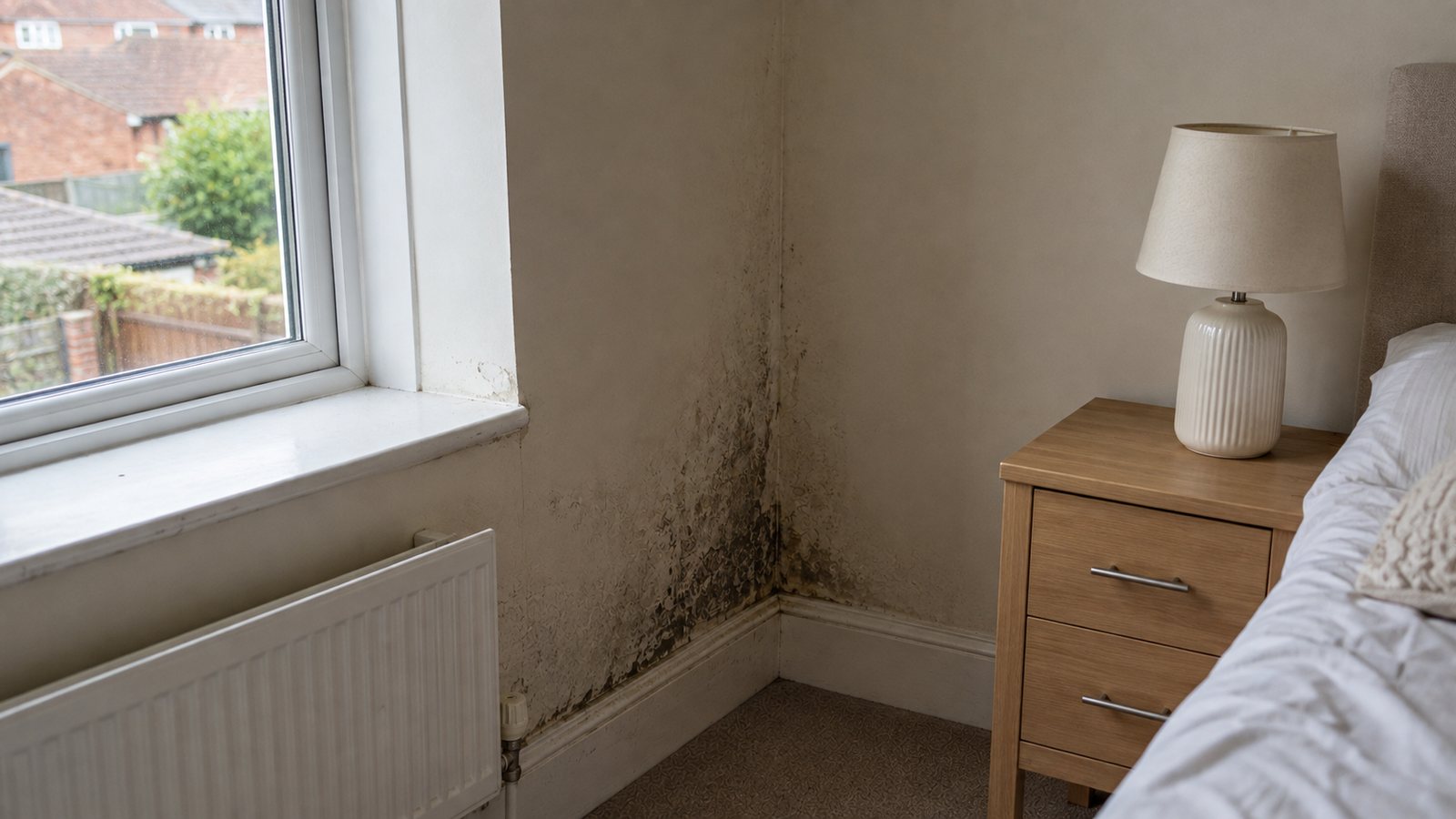
The shape of the mould matters
Condensation mould is often speckled or diffuse rather than forming a distinct tide mark. It commonly sits at ceiling corners, beside window reveals, behind curtains or behind furniture where the surface stays colder.
A single brown patch with a clear edge that grows after rain deserves a different line of investigation.
Furniture changes the wall temperature
A wardrobe pushed close to an outside wall restricts warm room air from reaching the surface. The wall behind it can be several degrees colder than the visible wall beside it, so mould may be heavy behind the furniture while the rest of the room looks normal.
Ventilation is more than opening a window
Check whether bathroom and kitchen extract fans actually move air outside, whether trickle vents are blocked and whether replacement windows have altered background ventilation. Heating pattern matters too: repeatedly allowing a wall to become very cold can increase surface condensation even when the average room humidity seems unremarkable.
Do not make mould explain unrelated damp
A room can have condensation at a cold corner and a leaking gutter on another wall at the same time. Black mould is evidence of prolonged surface moisture; it is not proof that every damp symptom in the room has the same cause.
Want prices from local damp-proofing contractors?
If you would like somebody local to inspect the problem and price the work, you can put the details through MyJobQuote and ask damp-proofing contractors in your area to quote.
Get local damp-proofing quotesQuote requests are provided by MyJobQuote, an independent third-party service. Local contractors may respond to your request.