Remove obvious bridges first
External render carried below DPC level, raised paths and flower beds can provide a route around an otherwise serviceable damp-proof course. Internal plaster or screed can also bridge the barrier.
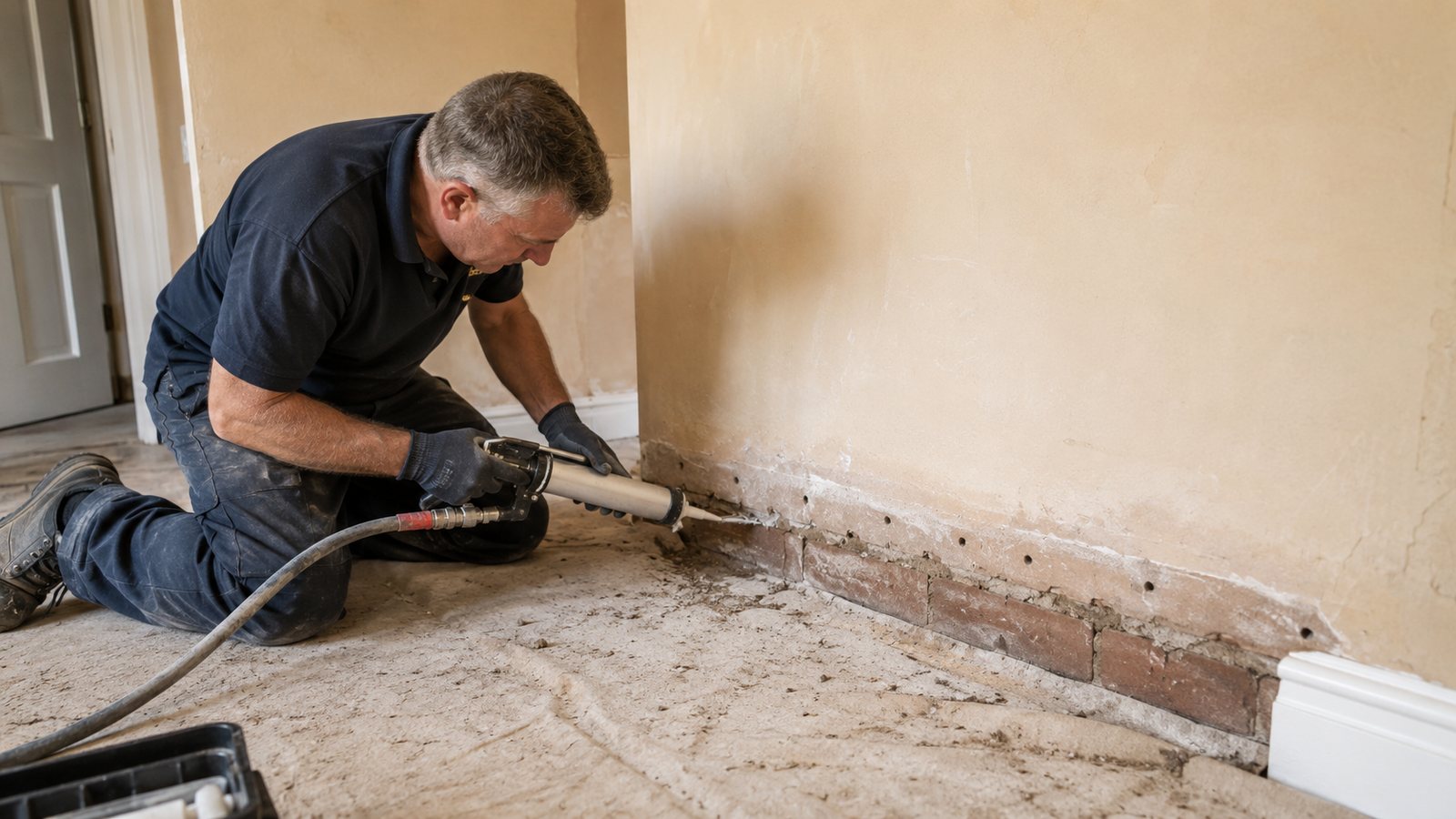
Chemical injection has a specific role
Creams and fluids are used to create a water-repellent zone within a mortar bed or masonry. Wall thickness, voids, rubble cores and irregular stonework affect how straightforward that is. Installation needs to suit the actual construction.
Plaster treatment is not cosmetic only
Contaminated plaster can hold hygroscopic salts. Where those salts are severe, the plaster specification after DPC work matters because a new decorative finish alone may still show damp-looking patches.
Drying takes time
Stopping capillary supply does not instantly remove the water already within masonry. Thick walls and low-ventilation areas can take a long time to return to equilibrium, particularly during cool weather.
Need quotes for the work?
MyJobQuote lets you set out what is happening at the property and request quotations from damp-proofing contractors in your area.
Request damp-proofing quotesQuote requests are provided by MyJobQuote, an independent third-party service. Local contractors may respond to your request.